


Do mo charaidean is mo theaghlach | To my friends and family,
Warm, green, gentle greetings your way in this fine season of Bealtaine. I hope that the greening around you has been a verdant reminder of the beauty nature effortlessly ‘is’, and that the rise of Spring spiraling its way towards Summer is lifting your gaze and your heart upwards and outwards for we have now entered the solar days, the light half of the year, and the time of the big sun (as opposed to the small sun of autumn and winter, of course).
Once, not so long ago, calendars were marked by hawthorn blossoms, the return of birdsong, and the moon’s waxing and waning, among myriad other natural ephemera. Many believe that our kin likely made collective agreements to celebrate the change in the season in a responsive and relational way with the Earth, coming together only when these markers had presented, as opposed to on a regularly scheduled or finite date. I have seen some understandable discourse recently regarding the rigidity of dates on the Gregorian calendar we now use in the West to celebrate around the wheel. I use these dates purely out of a modern pragmatic desire to coordinate a celebratory moment with other humans, for each celebration truly is a ‘season’ and like all beautiful, natural things, it arrives in washes and waves, stretching up from the Earth and unfurling from its branch in its own right and divine timing. The celebration or season of Bealtaine, of the Spring lifting towards Summer, is in part an invitation for the greening and growing within you to meet and honor the greening and growing around you. Every season is therefore an invitation towards awareness, presence, and connection with the ever shifting world we inhabit and share. What a treasure it is to live in this way.
At the start of this Bealtaine season I was honored to attend a beautiful retreat in West Cork, Éire, and share story around the fire under a glorious full moon that truly shone as a beacon of balance from the cosmos, glowing behind wafting clouds, moving softly from shine to shadow. It was my pleasure and honor to share three stories around the fire; the origin of Éire, Aengus Óg, and the Twelve Wild Swans. This was a retreat designed in devotion to the nettle, however gorse in its shining beauty really captured the heartmind of our retreat holder, my beloved sister, Tara Lanich-LaBrie (the land was aglow with gorse golds) and so it was that gorse and nettle were honored, as well as magical Irish seaweeds, and the endless bounty of medicinal and nourishing herbs that live among the countryside folk of Éire.


To dance and sing with women is always a treasure, and this retreat truly offered us space to be nourished by the land, sea and sky, and to nourish them in return, with our hearts, voices, and offerings. For it is always a relational practice, to lay on the land, and I was grateful to be among sisterkin who understood this implicitly. What a respite to be surrounded by women who came from their many professions and myriad responsibilities to coalesce on this beautiful, green, peninsula with hands and hearts effortlessly offered in gentle service and deep gratitude for the opportunity to live simply and walk gently among the wilds of such a beautiful, tranquil, and for many, deeply ancestral place.
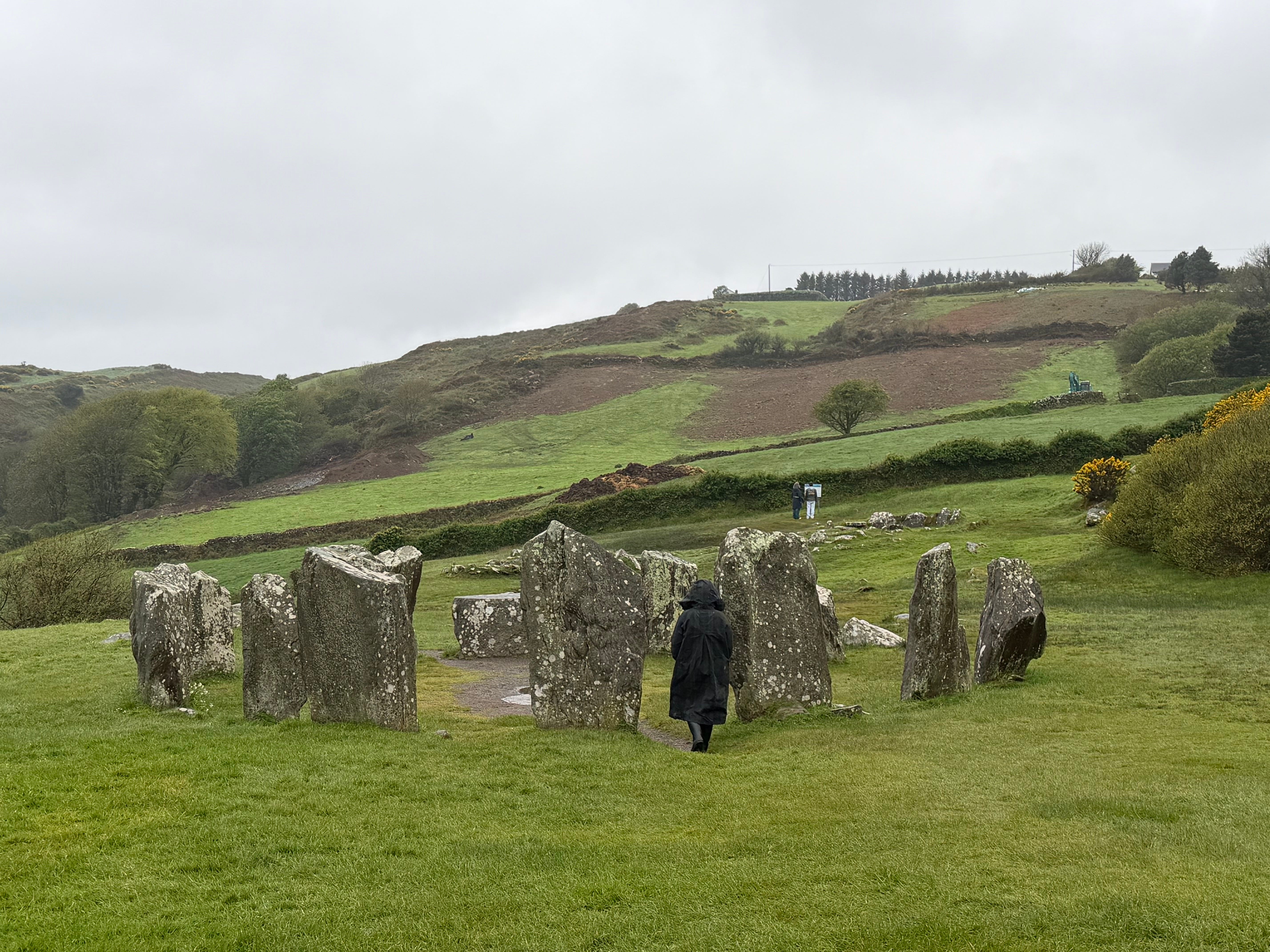
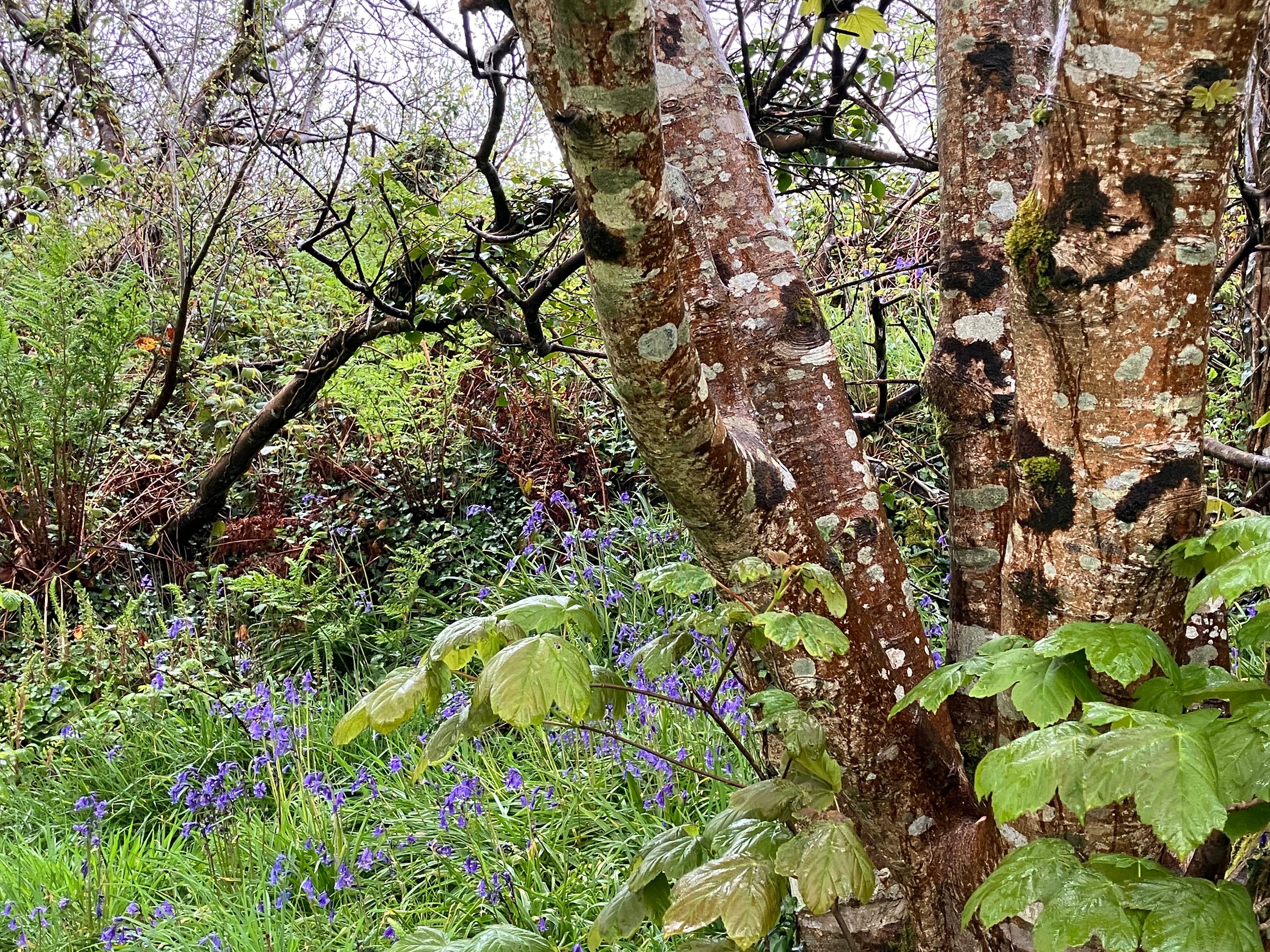
It was a treasure to wash my face in the predawn dew of Bealtaine while in Éire, and I hope it is not the last time that precious rite is undertaken by me and my sisterhood.
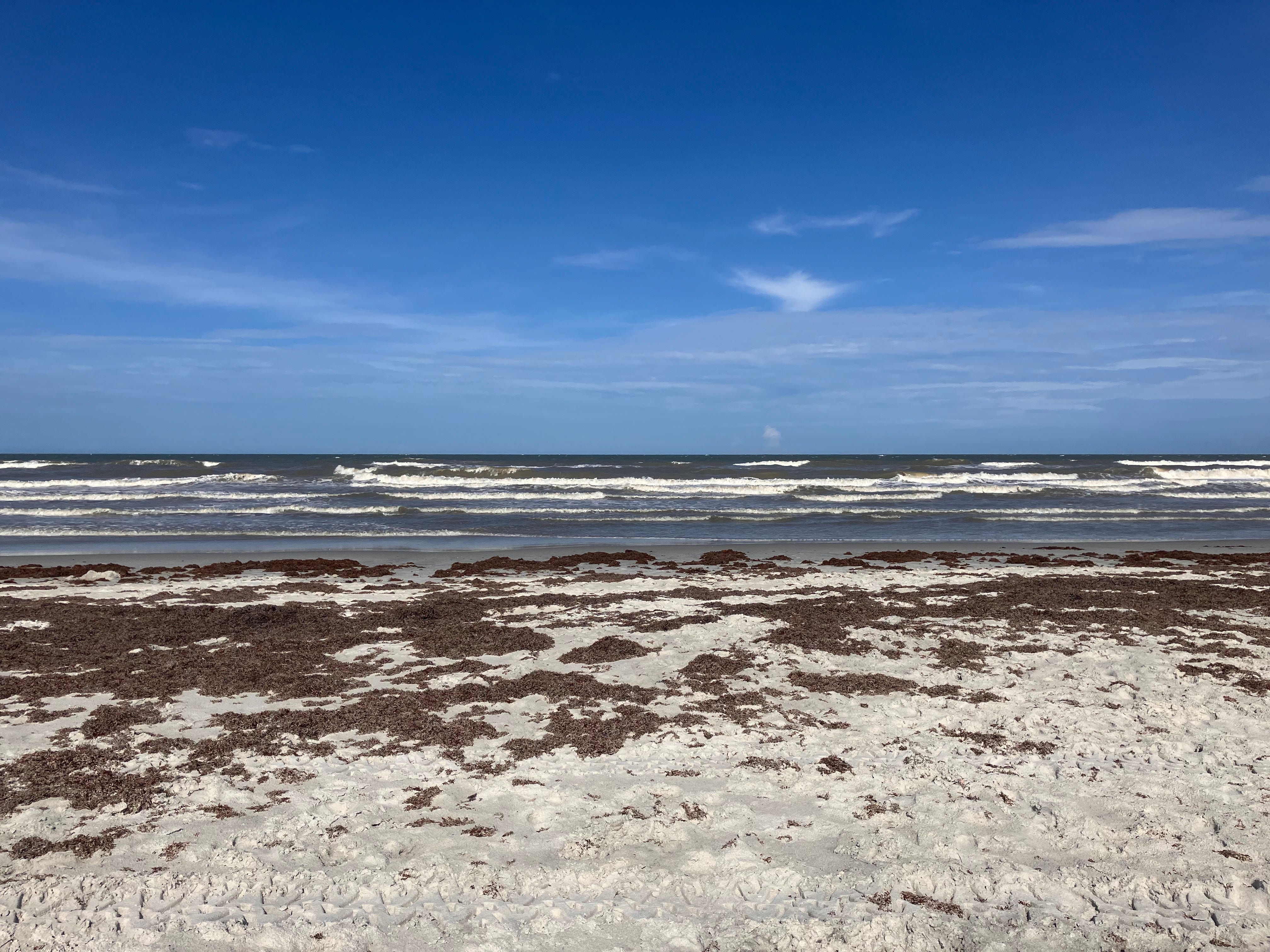
On our last day, we went to sea and visited the Southernmost inhabited Island of Ireland - Cape Clear Island (Oileán Chléire) a Gaeltacht places where the Irish language is predominately spoken while also viewing the Southernmost Island - Fastnet Rock. Shortly after leaving the hidden harbor of Baltimore, we made our way South and West, passing Sherkin Island to our right. Not 10 minutes beyond the harbor we spied large, slow moving fins, ancient black fins, and we had the great honor of seeing not one, but two large (15ft long) female basking sharks. Ancient beings, beautiful, gentle creatures, and soft filter feeders (plankton eating) of the ocean. If you aren’t familiar with these creatures, they are the second largest fish in the sea behind whale sharks and similar to those beauties, inspire awe and wonder among those of us who sing the song of the oceans. We also saw many coastal and ocean-faring birds and of course some playful and curious seals that day - beloved selkie kin.

While there, steeping myself in story and a daily dip in the wood-fired hot tub overlooking the sea (mostly filled with other wonderful women, though there was an occasional moment alone), I spent some time wondering and wandering about living cultures, ancestral walks, and what it is to listen to the sky, sea, and land. As though a mist, reaching softly into my consciousness, what presented were questions around what were my ancestors seeking? Not so much in the practical, though that of course always has a huge part to play (there’s no denying the realities of survival and safety) however this exploration was more regarding the philosophical questions of our existence, life, purpose, and capacity for connection and kinship with all we share our homeworld with. They, my ancestors, held my head and slowly turned it towards what they too had been seeking and looking towards, as though I was sitting among them and staring in the same direction. Universal questions, ponderances of all ages. The plants and waters had a lot to share, mostly through visions and feelings, and in response to my questions offered deep somatic transmissions of primordial connection and of change and the wild journey of being alive. Of course, as though in response to my question, I randomly(?) then stumbled upon this Japanese quote:
古人の跡をもと めず、古人の求たる所をもとめよ
Kojin no ato o motomezu, kojin no motomeshi tokoro o motomeyo
Seek not the way of the ancients, seek what they sought.
(Follow not the the footsteps of the ancients, seek what they sought.)Matsuo Basho quoting Kūkai (空海, 774 – 835), a Japanese Buddhist
Basho, quoting Kukai (Kobo Daishi), spoke these words to his student, the samurai, Morikawa Kyoroku. The characters 古人, kojin means an ancient (great) person of the past.
This is exactly what I was feeling.
What were they seeking and how might we too look towards their view while removing any hubris and assumptions wrought by our modern minds?
The quickening is upon us, the rise of technology, the rise of robotics, and the era of AI. Our ancestors also witnessed technological breakthroughs and changes, and also dreamed of animate objects, and technologies that would lessen the burdens of their daily lives. I remember speaking to my grandfather in his late 90s about how the world had changed since he was a boy. He took me on a journey from a childhood without electricity to cars, the introduction of personal computers, flying on the Concorde, and then the internet. We discussed medical breakthroughs, surgical breakthroughs, and world wars. I remember being in awe of what he had witnessed and wondering if the same starkness of change might happen in my own lifetime; he assured me that it would. The elders have a long view, especially those with curious minds who stayed curious to the end, as he did. Recently I have been tracking the robotic rise and AI in particular, wondering more and more about this next race to the billions and trillions by the tech elite, and whether deep Earth connection and contemplative spiritual life will become a relic of humanity’s past. Whether my way, a path that walks in communion with the waters and the seasons, that stops to swoon at foxgloves and lilacs, will, in the not too distant future, be considered primitive and arcane, and that the storykeeping I adore and my devotion to the practice, would also be lost to the annals of time, in favor of all stories being held somewhere in the digital plane of existence. Will my beloved Celtic mysticism dry up and dissolve into the dust of the stars?
I wonder what the children of today will devote themselves to, and whether their capacity for art, music, dance, love, life, creation, and exploratory and critical thinking (and therefore our species capacity for all of the above) is slowly being eroded by the rise of our own technologies. No doubt it’s having an impact. I’d love your thoughts and reflections.
I see rapid, rapid changes upon us, and I notice myself in response turning more and more towards my mammal self, meeting my kin of bark and feather, scale and wing, to ground myself into this age and time. I sit with Celtic goddesses, queens, and seers of old and seek their counsel, asking for grace through change, presence to sit with the unfailing beauty of nature, and courage to strengthen my heart in the face of those that still, still, after all this time, seek to harm others or pursue massive financial gains only for their own wealth hoarding and pleasure seeking.
2026 by H.L.Porter
I sit with books of print on page,
Stories that are told by humans on stage,
Circles of women around fires and candles,
Human musicians devoted to their practice,
and I can breathe,
out.
I venture forth into whipping, warm waves
Sit quietly with a sister on her lanai, and watch
The vines growing.
Breathing deeply in the scent of the gardenia in her second bloom.
Perhaps we share a story or two, so
we can breathe,
in.
What, really, what, and why and for who
Is this all for?
For when I talk to a palm, a frog, or a beetle
I pray that their time continues
For as long as it can.
As long as it will.
As long as it must.
Lest we all,
Are dust.
Which I suppose we always have been, just
Moistened and enlivened.
What will be left of art and song,
Beauty and wonder,
Enchantment and laughter,
Mystery and prayer,
Sacred sites and poetry,
Heart,
Heart,
Heart?
If all of our resources (time, money, minds)
Are devoted
machineward
…
?
So, I turn to poetry, and now more than ever, am seeking what our ancestors sought.
On that note, let’s take a wee wander down this curious path with some poets who were grappling with science and technology during their age. The first poem is 228 years old.
The Tables Turned by William Wordsworth (1798)
Up! up! my Friend, and quit your books;
Or surely you’ll grow double:
Up! up! my Friend, and clear your looks;
Why all this toil and trouble?The sun above the mountain’s head,
A freshening lustre mellow
Through all the long green fields has spread,
His first sweet evening yellow.
Books! ‘tis a dull and endless strife:
Come, hear the woodland linnet,
How sweet his music! on my life,
There’s more of wisdom in it.
And hark! how blithe the throstle sings!
He, too, is no mean preacher:
Come forth into the light of things,
Let Nature be your teacher.She has a world of ready wealth,
Our minds and hearts to bless—
Spontaneous wisdom breathed by health,
Truth breathed by cheerfulness.
One impulse from a vernal wood
May teach you more of man,
Of moral evil and of good,
Than all the sages can.
Sweet is the lore which Nature brings;
Our meddling intellect
Mis-shapes the beauteous forms of things:—
We murder to dissect.Enough of Science and of Art;
Close up those barren leaves;
Come forth, and bring with you a heart
That watches and receives.
This sonnet is only a little younger, written 197 years ago. The opening is pretty stark to me, implying that science, like time, alters and destroys that which is in its path…
Sonnet – To Science by Edgar Allan Poe (1829)
Science! true daughter of Old Time thou art!
Who alterest all things with thy peering eyes.
Why preyest thou thus upon the poet’s heart,
Vulture, whose wings are dull realities?
How should he love thee? or how deem thee wise,
Who wouldst not leave him in his wandering
To seek for treasure in the jewelled skies,
Albeit he soared with an undaunted wing?
Hast thou not dragged Diana from her car,
And driven the Hamadryad from the wood
To seek a shelter in some happier star?
Hast thou not torn the Naiad from her flood,
The Elfin from the green grass, and from me
The summer dream beneath the tamarind tree?
115 years ago in 1911, Rudyard Kipling wrote the Secret of the Machines considering the impacts of the new technologies of his age. That one is worth reading though is long, so I’ve linked it above.
We know that more than 2,500 years ago Greek mythology was exploring the creation of artifical life and the ‘mythic automata’ so we know that as ever, we are living in a world of our ancestors dreaming, all of this foreshadowed in myth.1 It might be a strange pill to swallow, yet I feel it so viscerally in my own experience of this world we share.
Wait, I can feel someone asking… “Heather, what does this all have to do with Bealtaine?” A fine question, and thank you for posing it! This is the season of rising and blossoming, the time of the sun. It is the beginning of the masculine half of the year. Given that so much of this technological rise for me is driven by the masculine, and while we are in the masculine days of our year, I am exploring (with great intention) what these changes mean both to myself and to our globe as a whole, partnering with the season of warmth and action, to weave the mystical and animistic into the practical path of daily modern life. I am not someone who currently lives in an isolated place, surrounded by nature, insulated from the wilds of the world. My day job is steeped in attempts to collaboratively solve societal problems, and I bring my sacred, animistic, storykeeping lens to boardrooms and investment meetings. For a long time a part of me was desperate to find solace from the pace of the modern world and to depart from it completely. What I have discovered, and essentially concluded, is that I was born for this time and to isolate myself would be a profound disservice to all the kin I came in service of. I am here to listen, to convene, to connect, to lead, to educate, to share story, and to help women in power rise while supporting men in power to relinquish the reigns and trust that we simply can’t solve our issues with the same thinking (and leadership) that got us into this collective clusterf&*$. So I bring the joys of the season, my contemplative spiritual path, the stories of my lineage, and decades of experience forward now in an attempt to be part of the changes that need to be made on this our sweet planet - to resurrect, conserve, and update our ways of being. My hope is that I can do this without losing sight of all I hold dear, which is where my slow, intentional, practice of prayer and communion with ancestors, myth, lore, and legend comes into play. I hope that helps answer the question. Celtic lore and wonder, woven into daily practice. Animism in action.
A Blessing
May this divine season of Bealtaine nourish and enliven you.
May your heart branches blossom and your heart roots stretch far beyond the confines of your own vessel such that connection with all kin is effortless, present, and deeply loving.
May we all have the courage to speak and stand for those and that which we care for.
May all blessings of verdant connection, warming sun, and long days bring more song, story, and wonder into your home.
May the song of the flowers bring you home to yourself with every petal, every color, every moment, you witness the ephemeral treasures they are.
May you know the deep wonders of the wild oceans, clear skies, and starred heavens.
May our art, our hearts, our voices, and our dreams be an effortless offering of love and service of divine, sacred duty.
Your sister of fin and feather, sun and surf, wave and wonder,
h. xx
Blurb from the book (recommended reading) Gods and Robots by Stanford Scholar, Adrienne Mayor. “The first robot to walk the earth was a bronze giant called Talos. This wondrous machine was created not by MIT Robotics Lab, but by Hephaestus, the Greek god of invention. More than 2,500 years ago, long before medieval automata, and centuries before technology made self-moving devices possible, Greek mythology was exploring ideas about creating artificial life and grappling with still-unresolved ethical concerns about biotechne, “life through craft.”
Fantastic read, thank you Heather 🌱
Yessss love this so much. Beautiful words and wisdom as always <3